Lesson
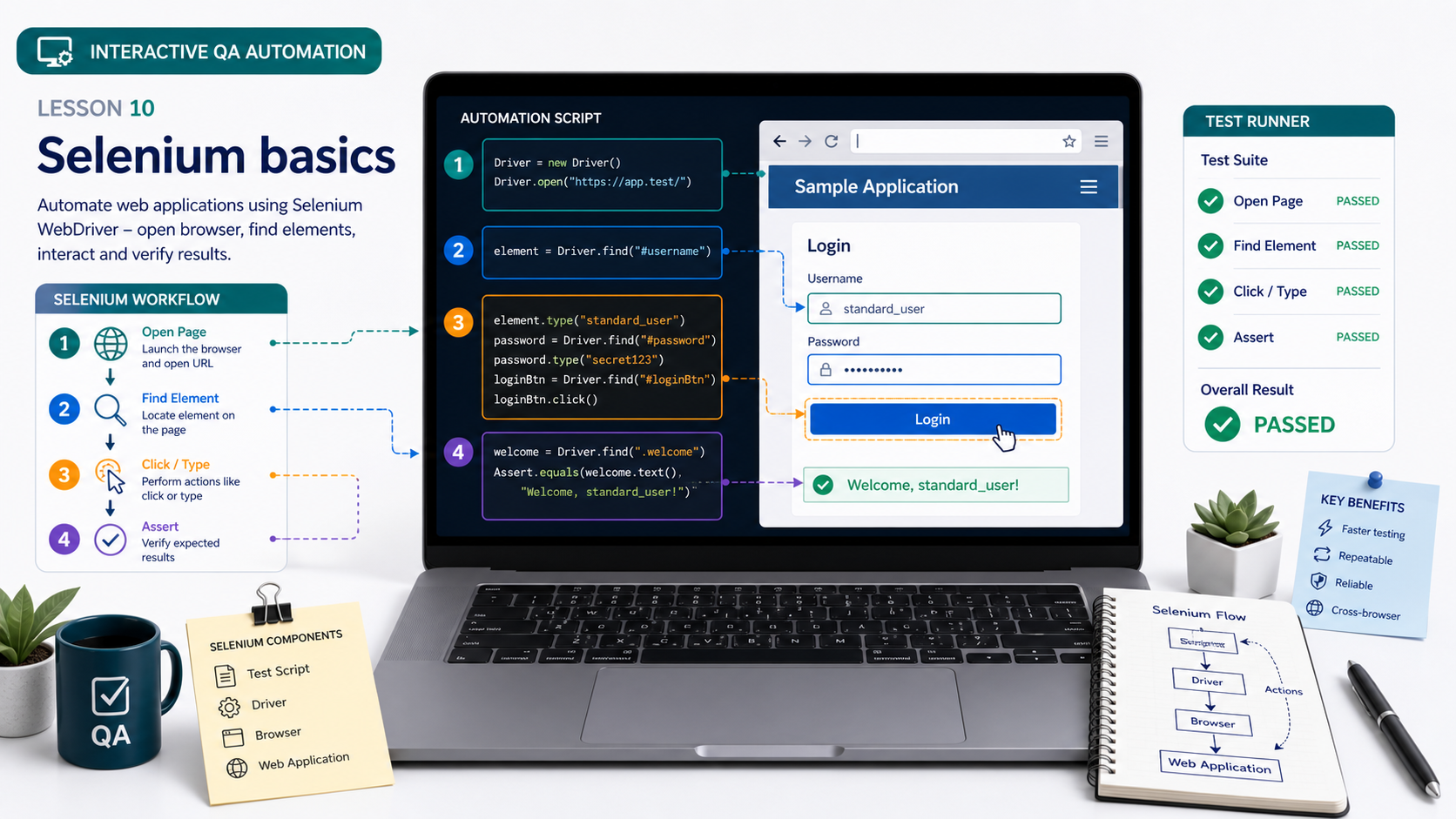
Selenium basics
Practice Selenium and Playwright fundamentals through realistic UI test examples.
Learning goals
Understand the concept, identify where it is used, and apply it in a practical QA task.
Theory explanation
Selenium basics is an essential QA topic. In real teams, QA engineers use it to reduce product risk and make release decisions with better evidence.
Key terms
quality, risk, requirement, expected result, actual result, evidence
Real-world example
A team releases a checkout page. QA checks critical flows, documents issues, and helps the team understand release risk.
Step-by-step explanation
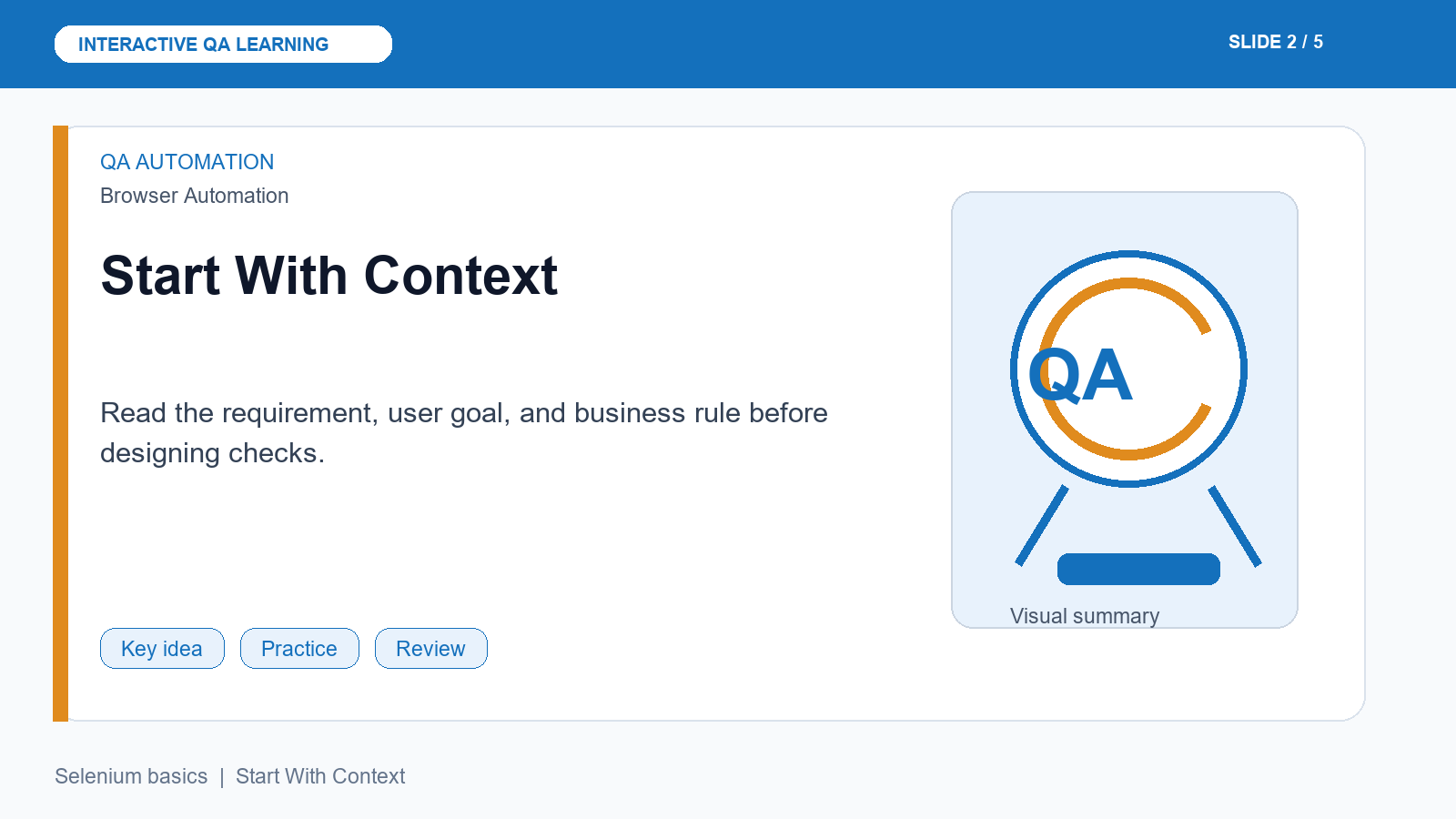
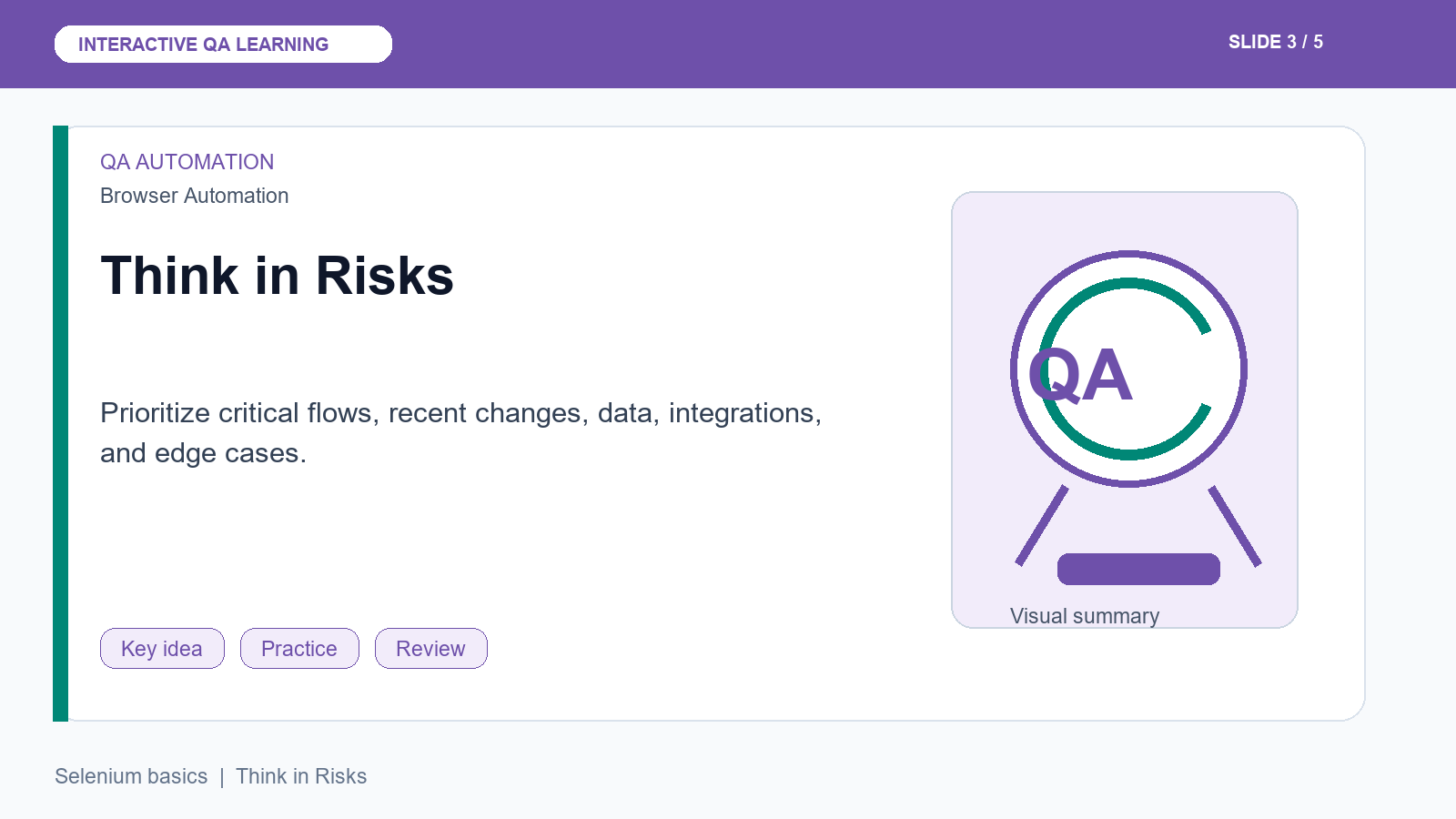
Read the requirement, identify risk, design checks, execute tests, document results, communicate findings.
Common mistakes
Testing without clear expected results, skipping edge cases, and writing vague bug reports.
Practical use case
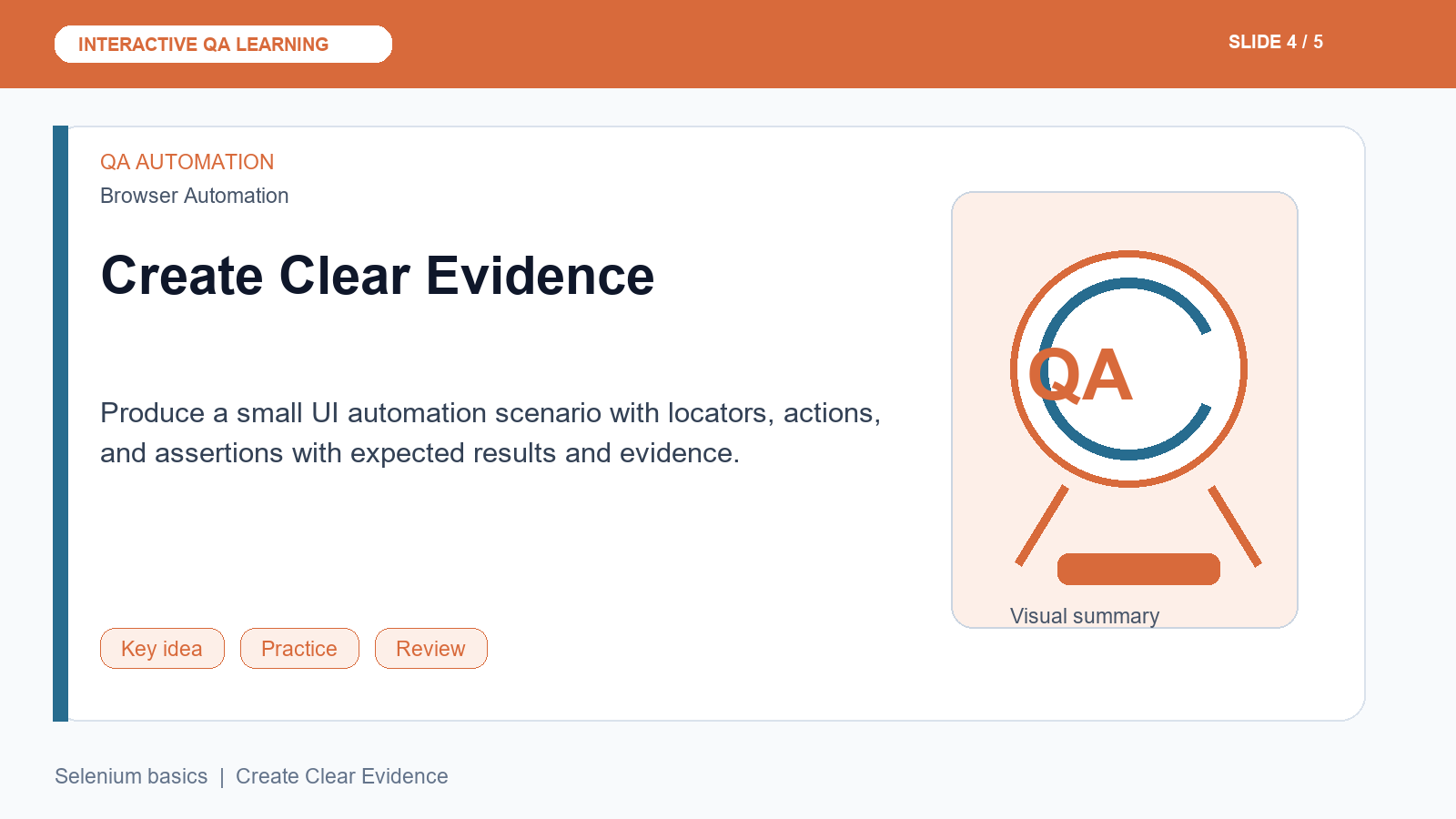
Create a small QA artifact for a login or checkout flow.
Summary
Use Selenium basics to make testing structured, clear, and useful for the whole team.
Slides
Slide 1
Selenium basics: Slide 1
Key point 1: apply Selenium basics through examples and practice.
Slide 2
Selenium basics: Slide 2
Key point 2: apply Selenium basics through examples and practice.
Slide 3
Selenium basics: Slide 3
Key point 3: apply Selenium basics through examples and practice.
Slide 4
Selenium basics: Slide 4
Key point 4: apply Selenium basics through examples and practice.
Slide 5
Selenium basics: Slide 5
Key point 5: apply Selenium basics through examples and practice.
Examples
Real QA example
A team releases a checkout page. QA checks critical flows, documents issues, and helps the team understand release risk.
Interactive Practice
analysis
Your task
Review a short requirement and identify one testing risk related to Selenium basics.
Expected answer guide
A clear risk with a matching test idea.